The history of humanity as told through one hundred objects from the British Museum in London is this week exploring powerful empires around the world in the 14th and 15th centuries. Today he is with a handsome jade cup that once belonged to one of the great leaders of the Timurid Empire - the great power that stretched across Central Asia, from Iran to parts of India. The owner of the cup was Ulugh Beg, the man who built the great observatory in his capital Samakand and who - like Galileo and Copernicus - has a crater on the moon named after him. Neil tells the story of the Timurids and charts the influences that spread along the Silk Road at this time. The Uzbek writer Hamid Ismailov and the historian Beatrice Forbes Manz describe the Timurid world and the extraordinary character of Ulugh Beg.Producer: Anthony Denselow
Kultur & Gesellschaft
A History of the World in 100 Objects Folgen
Director of the British Museum, Neil MacGregor, narrates 100 programmes that retell humanity's history through the objects we have made.
Folgen von A History of the World in 100 Objects
102 Folgen
-
Folge vom 16.09.2010Jade dragon cup
-
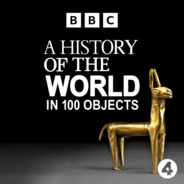
Folge vom 15.09.2010Inca gold llamaThe history of humanity - as told through one hundred objects from the British Museum in London - is back in South America. This week Neil MacGregor, the museum's director, is with the powerful elites - exploring the great empires across the world 600 years ago. Today he is with a small gold model of a llama, the animal that helped fuel the success of the great Inca Empire that ruled over some 12 million people right down the Pacific West Coast. For a culture living at high altitude in rough terrain and without horses or pack animals, the llama proved all important - for wool, for meat and for sacrifice. Neil tells the story of the Inca, the ways in which they organised themselves and things that they believed in. And he recounts what happened when the Spanish arrived. The scientist and writer Jared Diamond and the archaeologist Gabriel Ramon help tell the story.Producer: Anthony Denselow
-
Folge vom 14.09.2010Ming banknoteThis week Neil MacGregor's history of the world is exploring the great empires of around 1500 - the threshold of the modern era. Today he is in Ming Dynasty China and with a surviving example of some of the world's first paper bank notes - what the Chinese called "flying cash". Neil explains how paper money comes about and considers the forces that underpinned its successes and failures. While the rest of the world was happily trading in coins that had an actual value in silver or gold, why did the Chinese risk the use of paper? This particular surviving note is made on mulberry bark, is much bigger than the notes of today and is dated 1375. The Governor of the Bank of England, Mervyn King, and the historian Timothy Brook look back over the history of paper money and what it takes to make it work.Producer: Anthony Denselow
-
Folge vom 13.09.2010Tughra of Suleiman the MagnificentNeil MacGregor's world history as told through things. This week he is exploring the great empires of the world around 1500 - from the Inca in South America to the Ming in China and the Timurids in the Middle East. Today he is with the great Islamic Ottoman Empire that, by 1500, had conquered Constantinople as its new capital. The object Neil has chosen to represent this empire is the personal signature of the great Ottoman ruler Suleyman the magnificent, a contemporary of Henry V111 and Charles V. This monogram is the ultimate expression of Suleyman's authority at this time - a stamp of state and delicate artwork rolled into one. The Turkish novelist Elif Shafak and the historian Caroline Finkel help explore the power and meaning of this object.Producer: Anthony Denselow